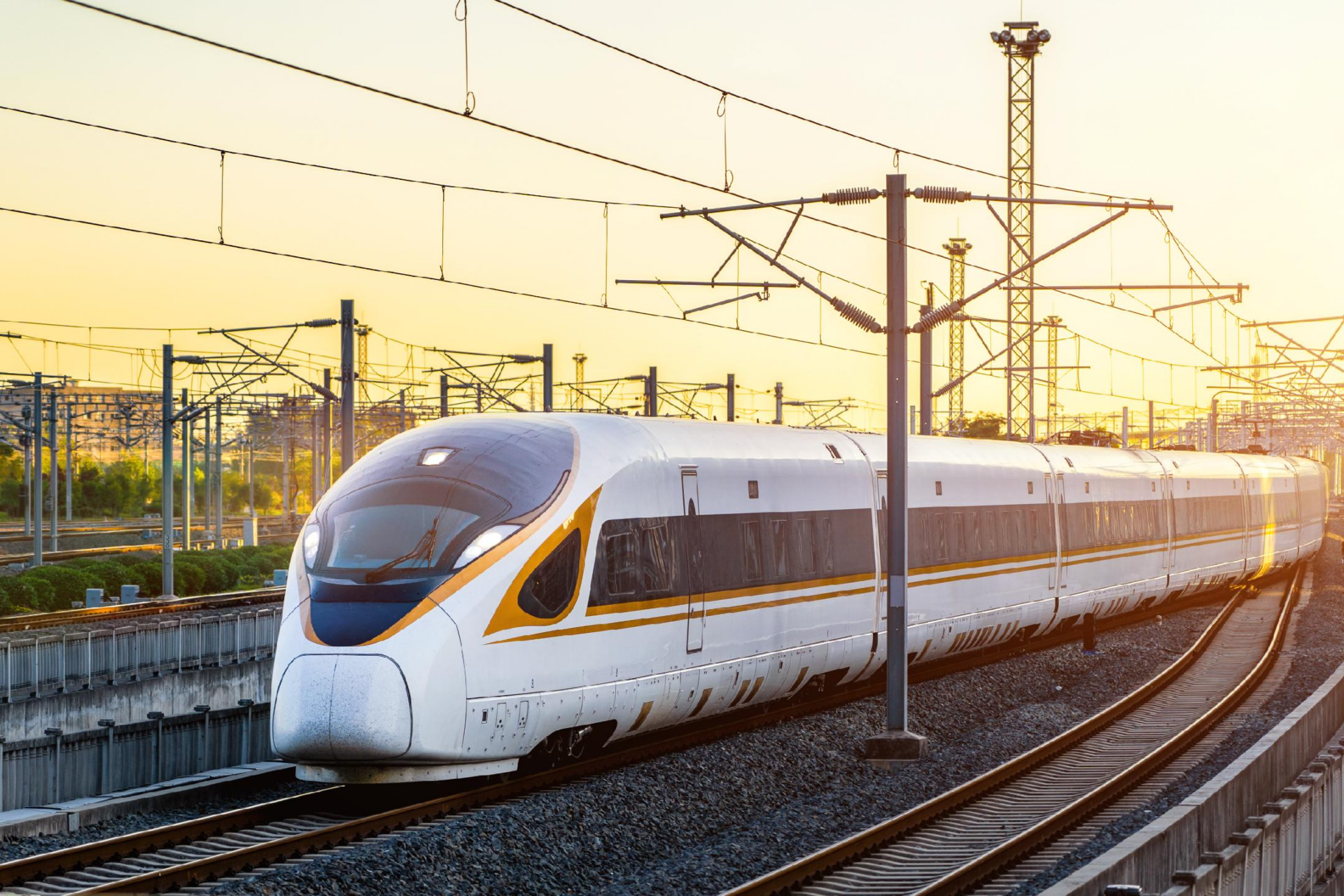
Let’s be real — China’s high-speed rail network is incredible. It’s also intimidating if you’ve never used it.
This guide walks you through everything — from which app to use, to picking your seat, to walking onto the right train.
China’s high-speed trains are classified by letters. Each letter means something different.
| Train Type | Speed | Best For | Example Routes |
|---|---|---|---|
| G (高铁) | Up to 350 km/h | Long-distance, fast travel | Beijing–Shanghai, Beijing–Xi‘an |
| D (动车) | Up to 250 km/h | Shorter routes, overnight trips | Beijing–Qinhuangdao |
| C (城际) | Up to 200 km/h | Intercity commutes | Beijing–Tianjin |
G trains are the ones you’ll probably take. They‘re the fastest, most comfortable, and connect all major cities.
| Seat Class | Layout | Comfort Level | Price | Best For |
|---|---|---|---|---|
| Second Class (二等座) | 3+2 | Good, similar to economy | Most affordable | Most travelers |
| First Class (一等座) | 2+2 | Wider seats, more legroom | ~1.5x second class | Extra comfort |
| Business Class (商务座) | 2+1 or 1+1 | Lie-flat seats, lounge access | ~3x second class | Special occasions |
Second class is perfectly fine. The seats are comfortable, there’s power outlets, and you get plenty of legroom. Unless you‘re very tall or want to splurge, stick with second class.
Recommendation: Trip.com or Klook
These are travel booking platforms designed for international users. The interface is in English, they accept foreign credit cards, and they handle the complex part for you.
How it works:
Pros: Easy, fast, no verification hurdles
Cons: Slight service fee (~¥15-30 per ticket)
Pro tip: Tickets are released 15 days before the travel date. Set a reminder — popular routes sell out fast.

Recommendation: Only if you‘re staying in China for a while
12306 is China’s official railway ticketing platform. It‘s the cheapest way to book — no service fees. But setting it up as a foreigner takes work.
What you need to do first:
Pros: No service fees, access to all tickets
Cons: Setup is cumbersome, verification can fail, app is glitchy
The honest take: Most tourists should skip this and use Trip.com.
If you‘re already in China and can’t book online, you can buy tickets at any train station.
What to do:
Pros: No app setup
Cons: Long queues, language barrier, tickets may be sold out
Real talk: Only do this if you have no other option. During holidays, tickets sell out weeks in advance.
Let‘s say you’re going from Beijing to Shanghai.
Step 1: Open Trip.com app → Tap “Trains” → Select “China High-Speed Rail”
Step 2: Enter “Beijing” and “Shanghai”. Select your date.
Step 3: Browse available trains. G trains take ~4.5 hours, D trains take ~12 hours (overnight). Pick one.
Step 4: Choose your seat: Second Class, First Class, or Business Class.
Step 5: Enter passenger details — exactly as on your passport. Name order: surname then given name.
Step 6: Select window or aisle preference. The system will try to accommodate you.
Step 7: Pay with your credit card.
Step 8: You‘ll receive an e-ticket confirmation. That’s your ticket. No need to print anything .
Step 1: Arrive early. Get to the station at least 45-60 minutes before departure. Stations are huge.
Step 2: Go through security. You‘ll pass through bag screening and ticket check. Have your passport ready.
Step 3: Find your waiting area. Check the departure board for your gate number. Follow the signs.
Step 4: Board. Scan your passport at the gate. Staff will help if it doesn‘t work.
Step 5: Find your seat. Seat numbers are above the window. Rows go by number; seats by letter (A = window, C = aisle in second class).
Step 6: Store your luggage. Overhead racks fit medium bags. Large suitcases go in designated storage areas at the end of each car.
Step 7: Enjoy the ride. Power outlets are under the seat. Snacks are sold from a cart. The train is quiet, smooth, and fast .
As of 2026, a second-class seat from Beijing South to Shanghai Hongqiao costs 553 – 673 RMB (~$81–99 USD). First class is ~930–1060 RMB. Business class is ~1748–2318 RMB .
Travel time: The fastest G train takes 4 hours 18 minutes. Most take 4.5-5.5 hours .
| City | Station Name | Chinese Name | Note |
|---|---|---|---|
| Beijing | Beijing South | 北京南站 | Main high-speed hub |
| Beijing | Beijing | 北京站 | For D and some G trains |
| Shanghai | Shanghai Hongqiao | 上海虹桥站 | Main high-speed hub |
| Shanghai | Shanghai | 上海站 | Central, older station |
Double-check your departure station. Beijing and Shanghai both have multiple stations. Don‘t show up at the wrong one .
Yes. You can buy tickets on Trip.com or Klook with a foreign credit card. You can also use the 12306 official app after completing passport verification. Foreigners are permitted to purchase tickets online using their passport.
No. China uses e-tickets. Your passport is your ticket. You will scan your passport at the gate to board. No paper ticket is needed.
Yes. The 12306 app offers an English interface. However, the English version is simplified and mainly intended for foreign passport holders. Registration and payment may still require Chinese methods.
Not easily. 12306 primarily accepts Alipay, WeChat Pay, and UnionPay linked to Chinese bank accounts. Use Trip.com or Klook instead — they accept Visa and Mastercard.
Arrive 45-60 minutes before departure. You need time for security checks and finding your gate. Stations are large and can be confusing.
You can exchange your ticket for a later train at the station ticket counter, subject to availability. A fee applies. Same-day exchanges are generally possible for G and D trains. If you don‘t exchange it, the ticket is forfeited.
Yes. Each passenger can bring up to 20kg of luggage. Size limits: 160cm total length for standard items, 130cm for sleeper cars. Oversized luggage must be checked.
P.S. Need help planning your train route as part of a Beijing adventure? Join our Hutong Bike Tour — we‘ll get you moving above ground before you head underground to the high-speed rail. 🚲🚄
If you are in Shanghai, we also have Shanghai Bike Adventure that takes you to the city’s most beautiful corners!
✨You’re reading a blog from Our Beijing ✨
We design authentic adventures for travelers who want to dive deeper
— cycling through hutongs, tasting Beijing’s favorite snacks, and hiking the wild, unrestored Great Wall.