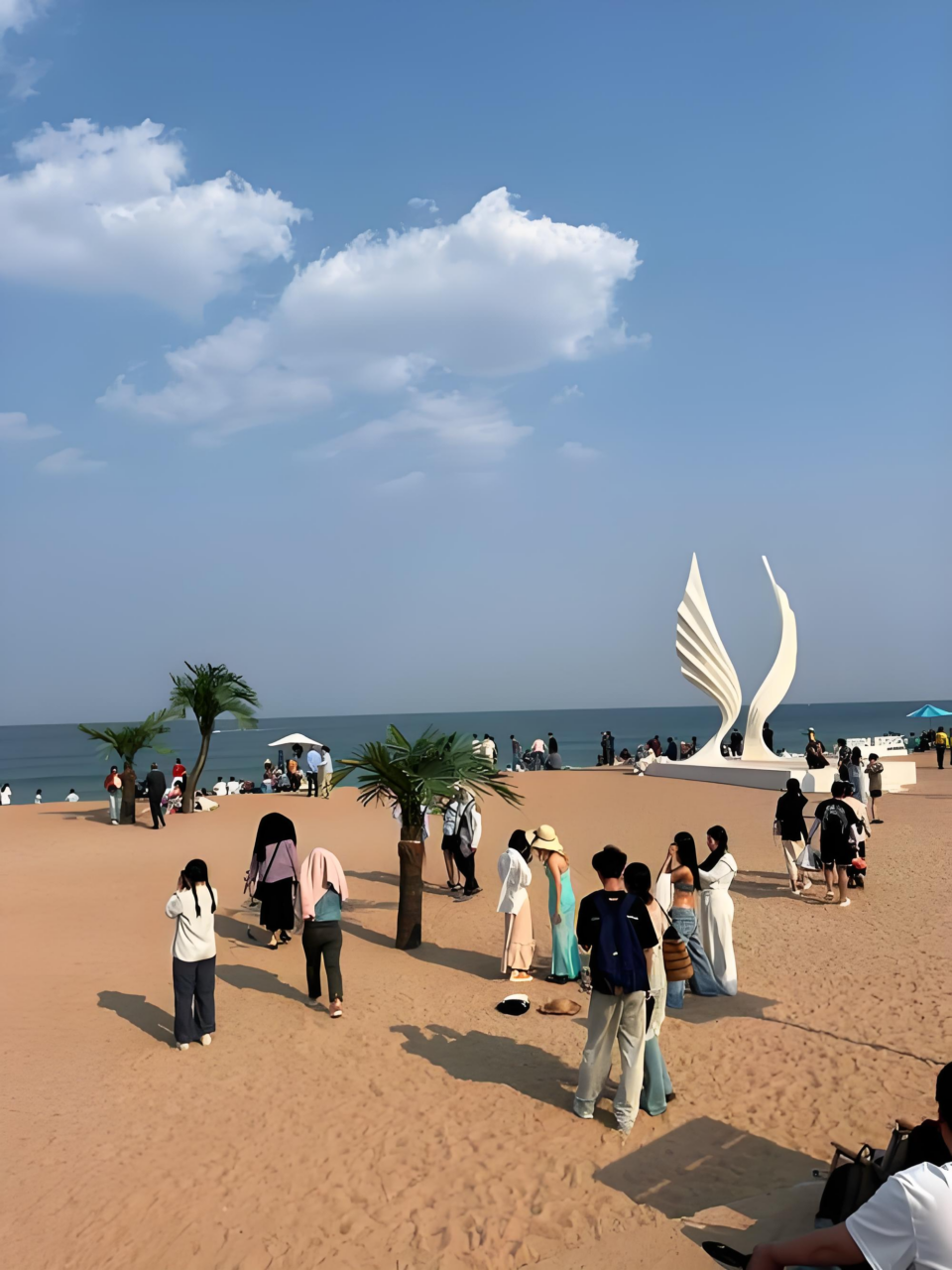
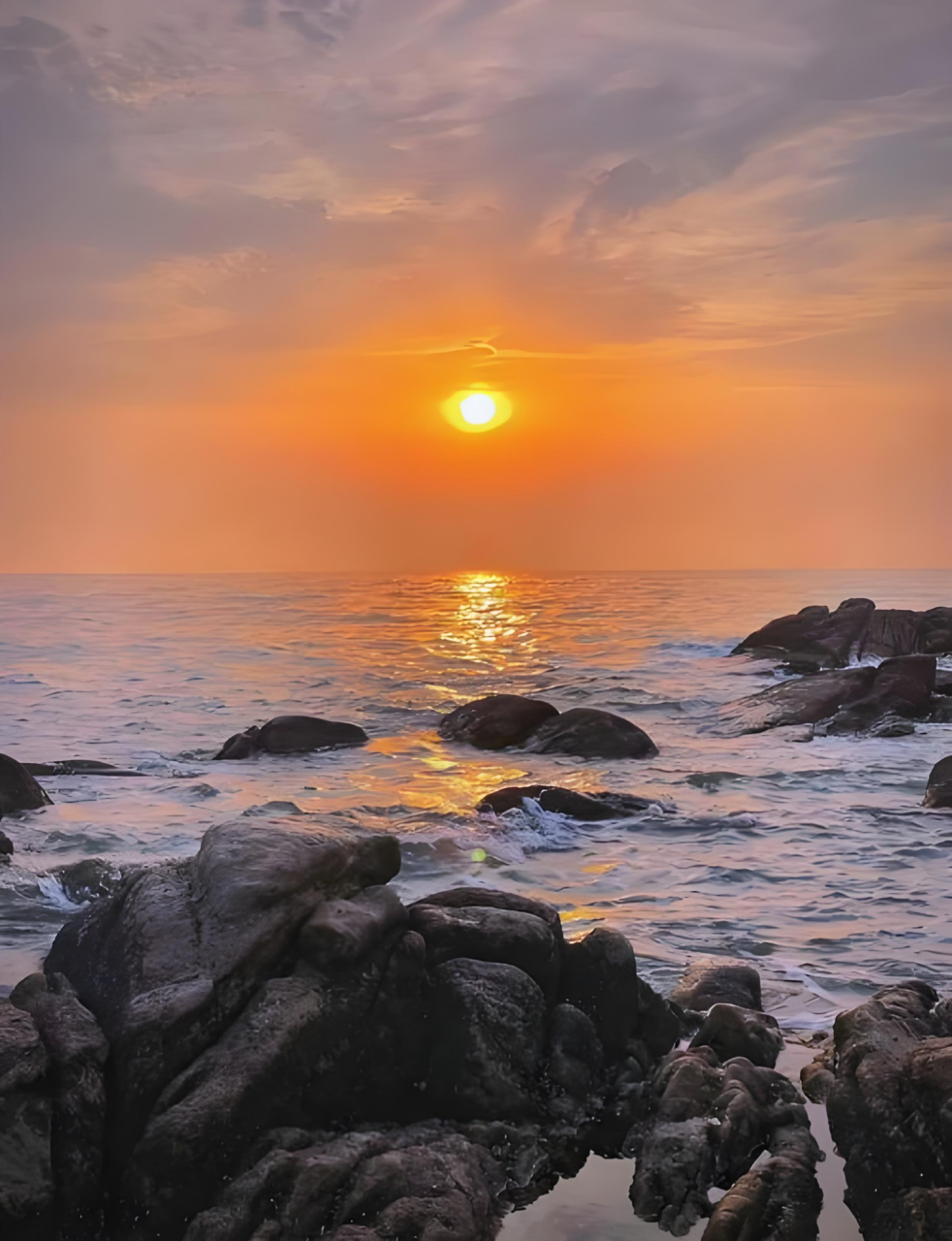
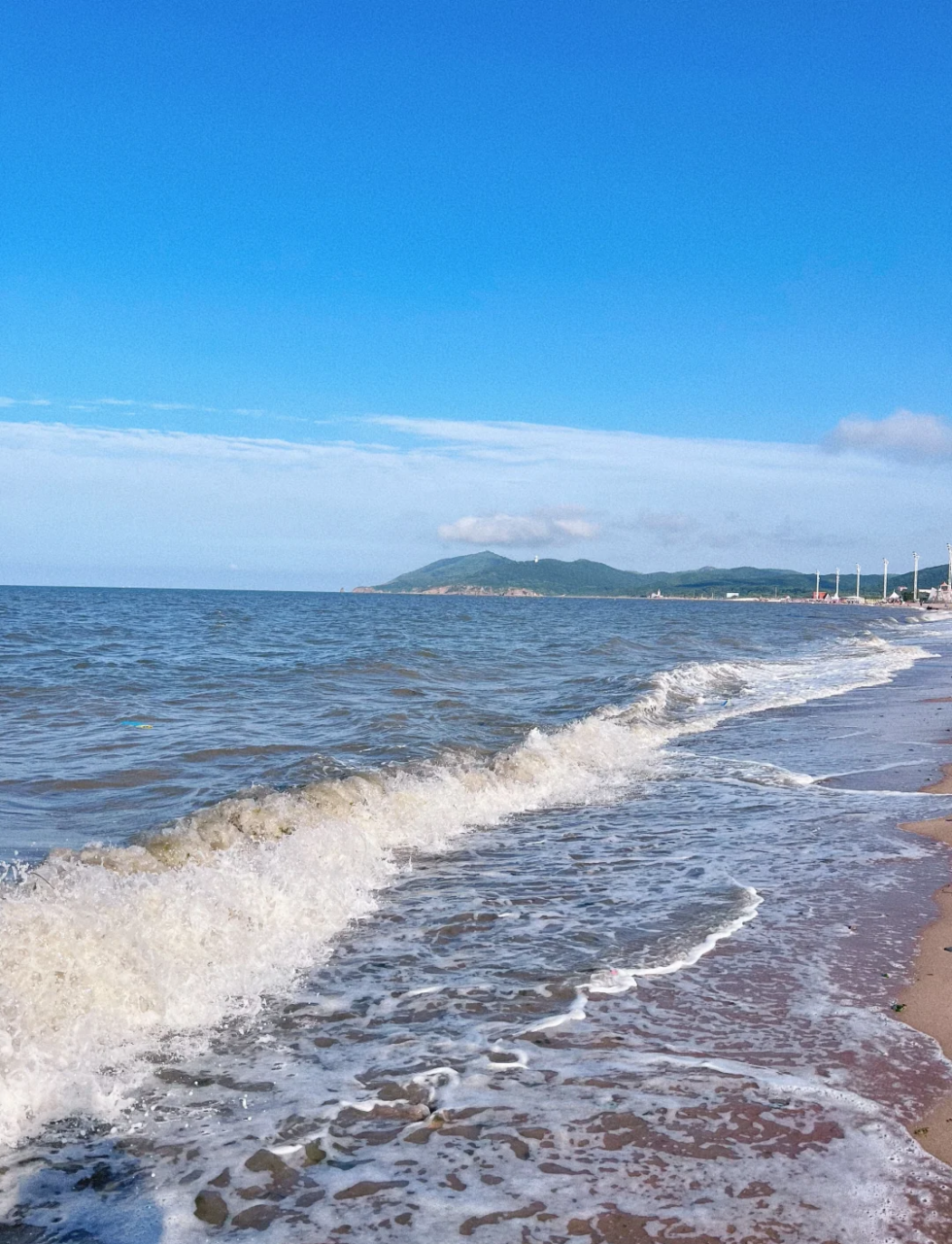
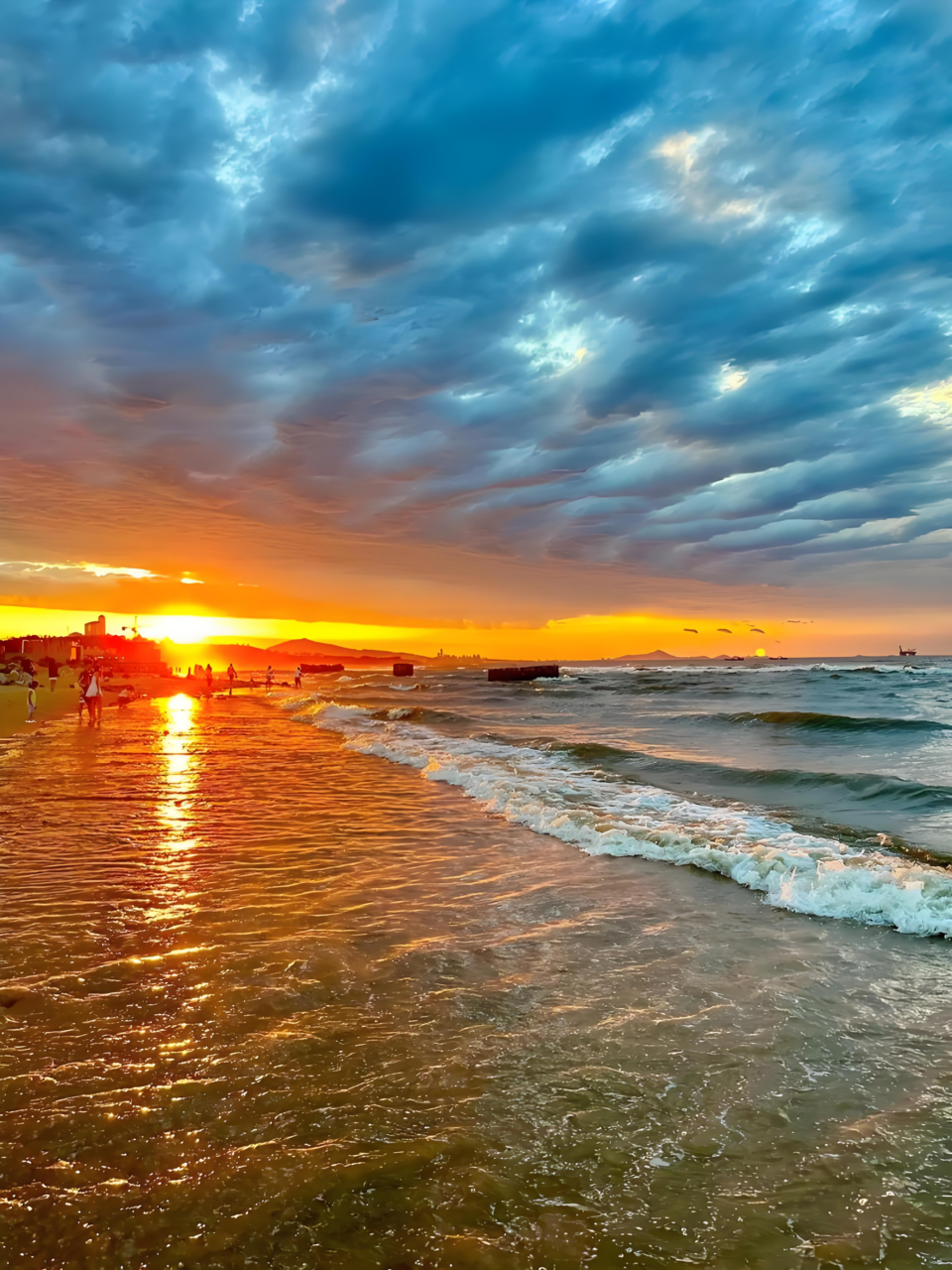
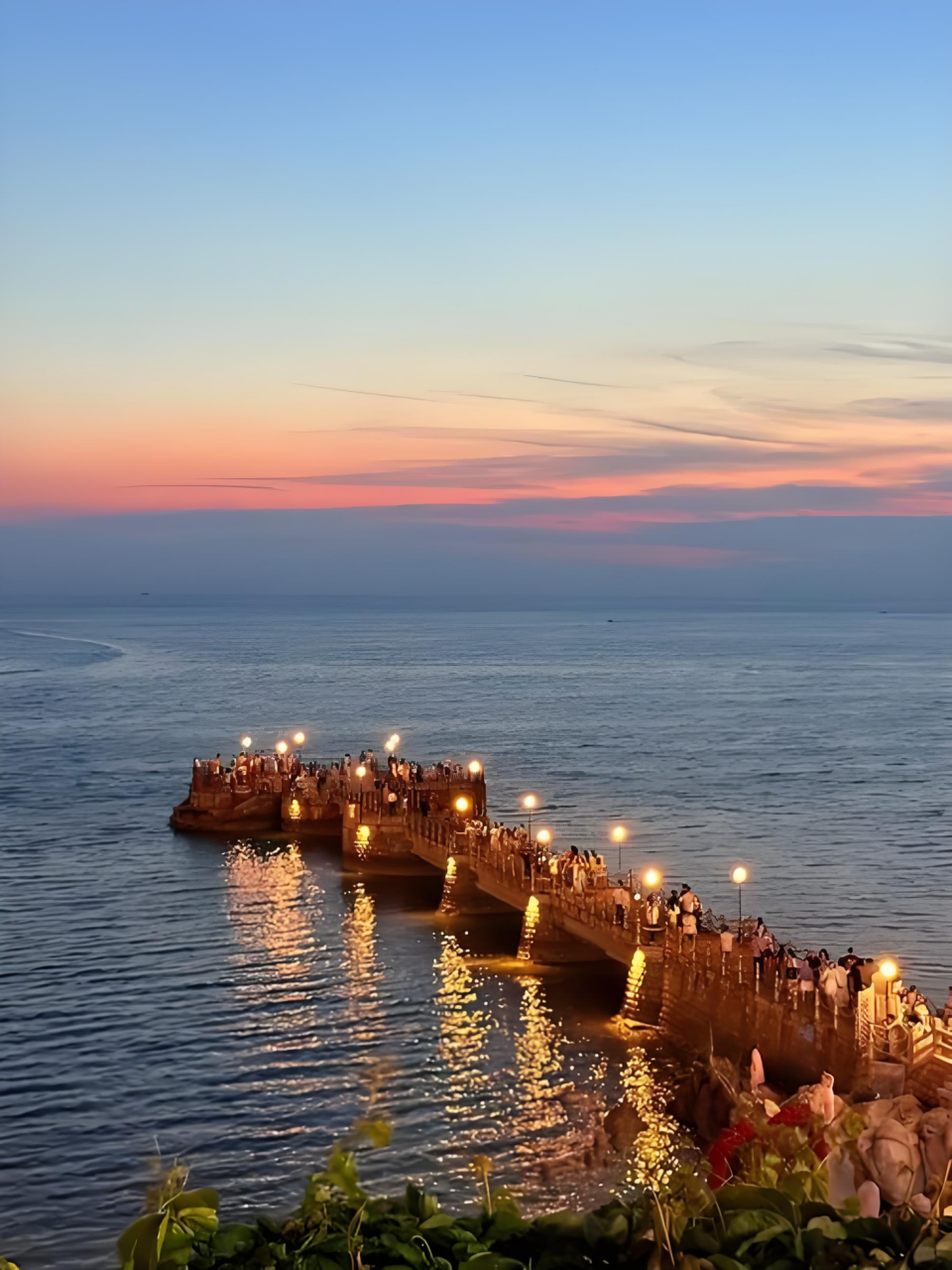
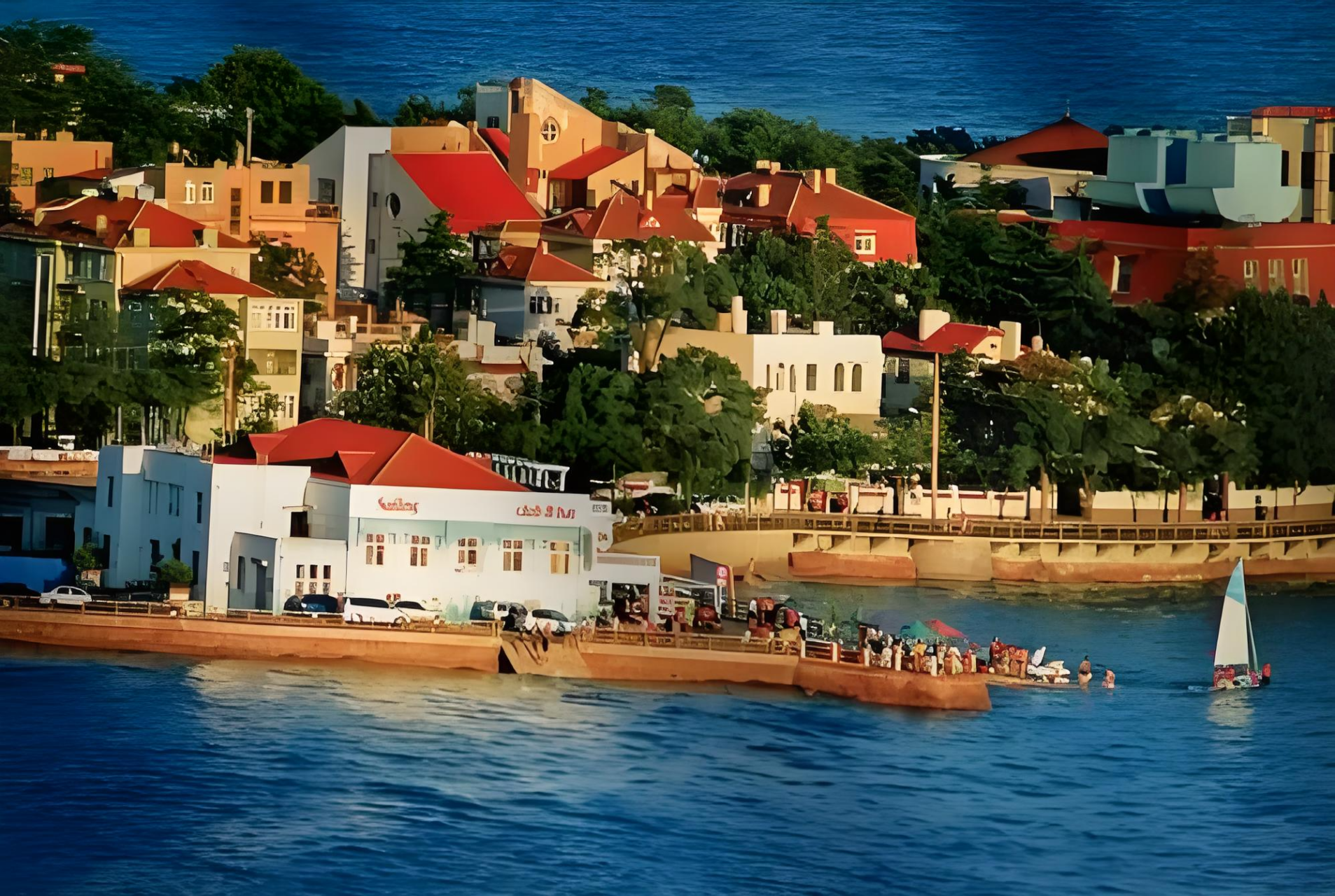
Further up the coast, Huludao sees fewer tourists than Qinhuangdao. The water is cleaner, the beaches are quieter, and the pace is slower.
Train time: ~3 hours
Ticket price: ~¥169
What to eat: 辣炒海鲜 (spicy stir-fried seafood), 水豆腐 (soft tofu pudding), 海鲜火锅 (seafood hotpot)
Where to go: 龙回头 (Longhuitou) for coastal views, 兴城古城 (Xingcheng Ancient City) for Ming-era walls, 兴城海滨 (Xingcheng Beach) for swimming
3️⃣ Dalian (大连) – The City That Feels Like a Resort
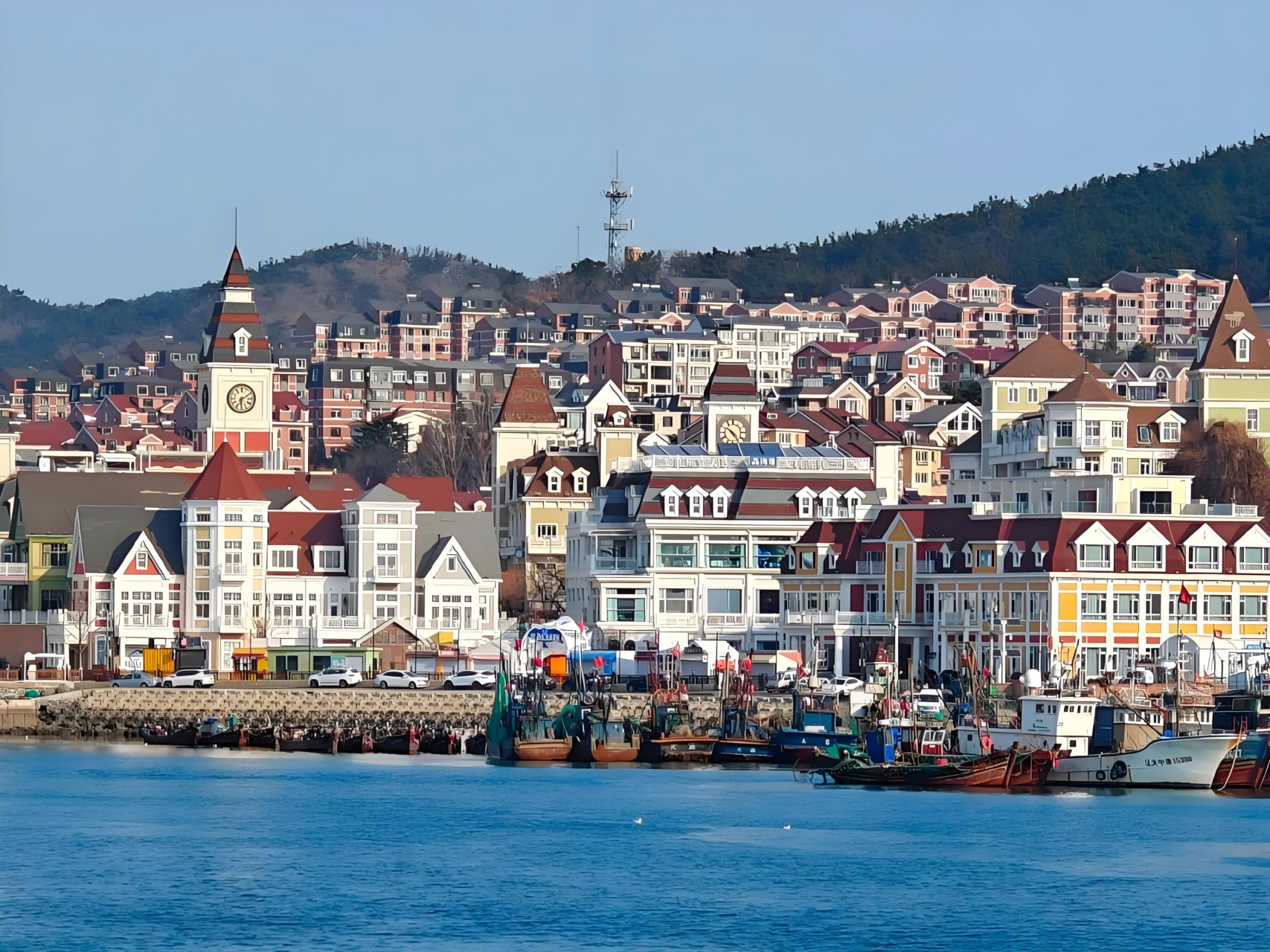
Dalian isn’t just a beach town. It’s a whole coastal city with European-style architecture and a bay that rivals Qingdao’s.
Train time: ~4 hours
Ticket price: ~¥445
What to eat: 海胆水饺 (sea urchin dumplings), 海菜包子 (seaweed buns), 鸡架 (chicken bones — a Dalian specialty)
Where to go: 星海广场 (Xinghai Square) and the 跨海大桥 (sea-crossing bridge), 渔人码头 (Fisherman’s Wharf) for Mediterranean-style photos
4️⃣ Rizhao (日照) – Underrated, Affordable, Golden Sand
Rizhao is the quiet cousin of Qingdao. Fewer tourists, lower prices, and a coastline that stretches for kilometers. The name means “sunshine.”
Train time: 4-4.5 hours
Ticket price: ~¥392
What to eat: 海肠捞饭 (sea intestine rice), 海沙子面 (tiny clam noodles), 鲅鱼水饺 (Spanish mackerel dumplings)
Where to go: 万平口景区 (Wanpingkou Scenic Area) for the main beach, 桃花岛 (Peach Blossom Island) for a half-day boat trip, 森林公园 (Forest Park) for beach + trees
5️⃣ Yantai (烟台) – Penglai, Beaches, and Excellent Seafood
Yantai is known for the legendary Penglai Pavilion (where the Eight Immortals supposedly sailed off to sea) and some of the best beaches in northern China.
Train time: ~5.5 hours
Ticket price: ~¥427
What to eat: 烟台焖子 (Yantai menzi — starch noodles), 鲅鱼水饺 (mackerel dumplings), 炸蛎黄 (fried oysters), 海肠捞饭 (sea intestine rice)
Where to go: 金沙滩公园 (Golden Beach Park) for swimming, 烟台山 (Yantai Hill) for old consulates and a lighthouse, 养马岛 (Yangma Island) for cycling, 蓬莱阁 (Penglai Pavilion) for the legendary tower
6️⃣ Weihai (威海) – Cleanest Beaches, Best for Families
Locals say Weihai has the cleanest water and most family-friendly beaches on this list. It’s also the closest Chinese city to South Korea — you’ll see Korean BBQ everywhere.
Train time: 4.5-6 hours
Ticket price: ~¥463
What to eat: 干炸小黄鱼 (crispy fried small yellow croaker), 炸海蟹 (fried sea crab), 铁锅海蛎子 (cast-iron pot oysters)
Where to go: 九龙湾公园 (Jiulong Bay Park) for a quieter beach, 火炬八街 (Huoju 8th Street) for the Japanese-style photo spot, 刘公岛 (Liugong Island) for naval history, 国际海水浴场 (International Bathing Beach) for swimming
7️⃣ Qingdao (青岛 Tsingtao) – The Classic. Beer, Beaches, and Bavarian Architecture.
Qingdao is the one everyone knows. German colonial architecture, a world-famous beer, and beaches that have been drawing tourists for over a century.
Train time: 4.5-5 hours
Ticket price: ~¥341
What to eat: 青岛锅贴 (Qingdao potsticker dumplings), 青岛大包 (giant steamed buns), 青岛香酥鸡 (crispy chicken)
Where to go: 栈桥 (Zhanqiao Pier) for the iconic photo, 五四广场 (May Fourth Square), 奥帆中心 (Olympic Sailing Center), and nearby 崂山 (Laoshan Mountain) if you have extra time
FAQ:
1️⃣ Which beach city is closest to Beijing by train?
Qinhuangdao is the closest, with a train time of about 2 hours. It’s the most convenient option for a quick beach trip.
2️⃣ Are these beach cities crowded during summer weekends?
Yes — especially Qinhuangdao, Qingdao, and Dalian. July and August are peak season. Go on a weekday if you can, or book trains and hotels well in advance.
3️⃣ Can I swim in the sea at these cities?
Yes. All seven have designated swimming beaches.
4️⃣ Which beach city is best for families with young kids?
Weihai’s International Bathing Beach is shallow, calm, and very safe for children. Rizhao’s Wanpingkou Beach is also family-friendly.
5️⃣ Do I need a visa to visit these beach cities if I’m on visa-free entry to China?
No. All of these cities are within mainland China. If you’ve entered China under the visa-free policy (30 days for tourism), you’re free to travel to any of these destinations by train.
✨You’re reading a blog from Our Beijing ✨ We design authentic adventures for travelers who want to dive deeper — cycling through hutongs, tasting Beijing’s favorite snacks, and hiking the wild, unrestored Great Wall.