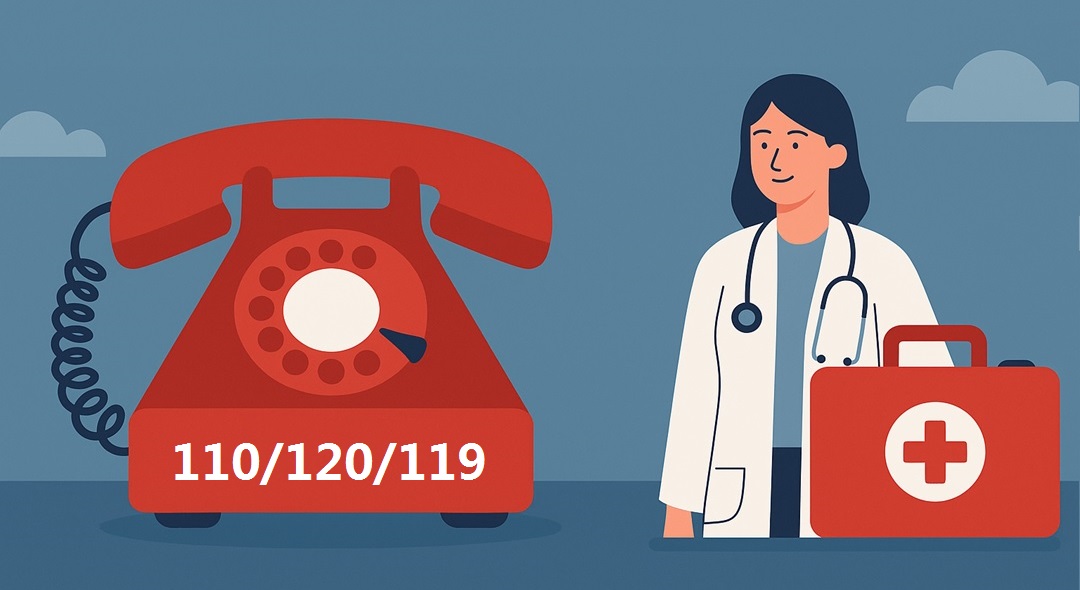
Traveling to a new country brings excitement, but it’s also wise to be prepared. Knowing how to access help and healthcare can give you peace of mind and ensure a smooth trip. This guide covers the practical information about navigating health services and essential emergency numbers in Beijing.
🚨 Essential Emergency Numbers in China
Memorize or save these three critical numbers in your phone. They are free to call from any phone, even without a SIM card or credit.
Number
Service
When to Use
110
Police
For crime, theft, loss of passport, serious public disturbance, or when you feel unsafe.
120
Ambulance / Medical Emergency
For sudden illness, serious injury, or any situation requiring urgent medical attention.
119
Fire Department
For fire emergencies. They also handle some rescue operations.
Key Things to Remember While Calling the Emergency Numbers in Beijing:
Language Barrier: The operators may not speak English. It is crucial to clearly state your location (address, landmark) first. If possible, ask a Chinese-speaking bystander or hotel staff to make the call for you.
WeChat Alternative: You can also access some emergency services through the WeChat “City Services” mini-program (found under “Me” > “Services”), which may offer translation support. For a full guide on setting up your phone for travel, our article Essential English-Friendly Apps for China Travel also covers other must-have applications.
Non-Emergency Police: For minor issues (like a lost item), you can visit the local police station (Pai Chu Suo 派出所).
🏥 Navigating Healthcare in Beijing
Beijing has a tiered healthcare system. For travelers, the main choices are between public international clinics and full-service private hospitals.
1. For Minor Illnesses & Non-Emergency Care
Local Clinics & Pharmacies: For a common cold, minor cuts, or headaches, you can visit a local pharmacy. Pharmacists can often recommend and sell over-the-counter medicine. For slightly more serious issues, community health centers are affordable but language will be a significant barrier.
Recommended Choice: International Clinics / SOS
Best for: Expats and tourists. They are designed for this purpose.
What to expect: English-speaking doctors, Western standards of care, and the ability to handle insurance paperwork directly. Wait times are short.
2. For Serious Illness, Injury, or Specialized Care
Recommended Choice: Large International Hospitals
Best for: Emergencies that are not life-threatening, required specialist consultations, surgeries, or inpatient care.
What to expect: Full-service hospitals with 24/7 emergency departments, a wide range of specialists, and international patient services. Costs are high.
Call 120 immediately. The ambulance will usually take you to the nearest large public hospital with an emergency room.
Be prepared: The ER at a public hospital will be crowded, chaotic, and have minimal English. Having a translator (friend, guide, hotel concierge) with you is invaluable. The focus will be on immediate, life-saving treatment.
💡 Practical Tips for a Healthy Trip
Travel Insurance is Non-Negotiable. Ensure your policy covers medical evacuation and direct billing with recommended hospitals like United Family. Carry your insurance card at all times.
Prepare a Basic Medical Kit. Bring your regular prescription medicines (in original containers), pain relievers, stomach remedies, plasters, and any personal essentials.
Use Technology. Have translation apps (like Pleco or Microsoft Translator) ready for medical situations. Keep the address of your hotel saved in Chinese characters on your phone.
For Prescriptions: International clinics and hospitals can prescribe most common Western medications. Bring a copy of your prescription from home.
📞 Summary & Quick-Reference Card
Situation
Immediate Action
Best Contact / Destination
Life-Threatening Emergency
Stay calm, assess location.
Call 120 (Ambulance)
Fire
Evacuate first.
Call 119 (Fire Department)
Crime or Danger to Safety
Get to a safe place.
Call 110 (Police)
Non-Emergency Medical Issue
Contact your hotel concierge or insurance helpline.
International Clinic (e.g., SOS, United Family Clinic)
Serious but Non-Critical Illness
Have your insurance details ready.
International Hospital (e.g., Beijing United Family Hospital)
Need Medicine for Minor Issue
Visit a local pharmacy.
Use a translation app to describe symptoms.
Being prepared isn’t about expecting trouble—it’s about empowering yourself to handle any situation confidently. With this knowledge of emergency numbers in Beijing, you can focus on enjoying the incredible sights, food, and culture that Beijing has to offer.
We hope this guide helps you feel prepared and confident, allowing you to fully enjoy your time in Beijing and other cities across China. For an even deeper dive beyond the guidebooks, join Our Beijing for authentic, unforgettable experiences that connect you with the real heart of the city.