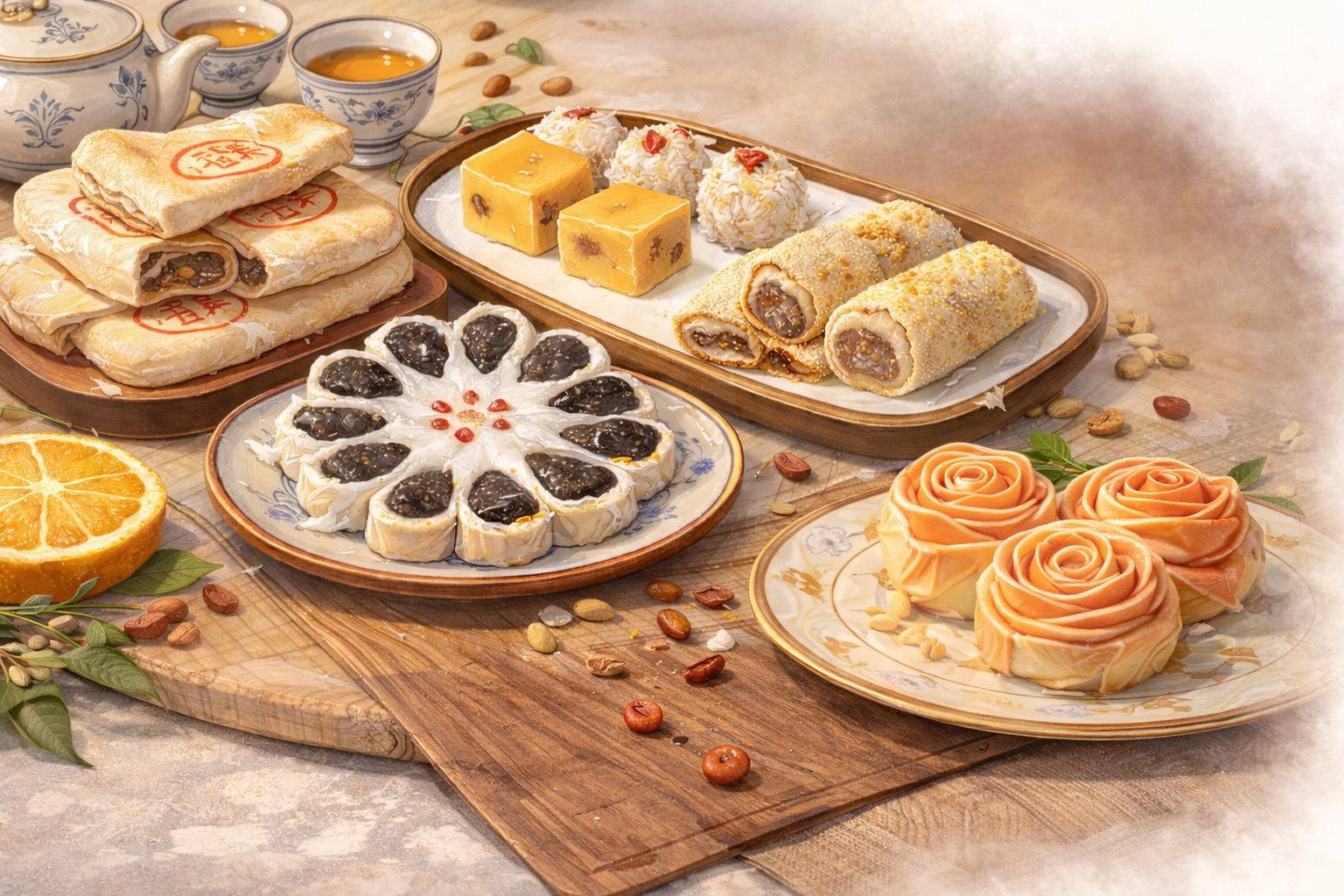
When people think about food in Beijing, they often jump straight to Peking duck or hotpot. But there’s another side of the city’s food culture that’s just as important—and much older: Beijing-style pastries, known as 京式糕点.
These traditional sweets didn’t all start in the capital. They evolved from rural North China, Northeast China, and Manchu and Mongolian communities, before eventually gathering and refining in Beijing. The result is a pastry tradition that blends imperial elegance with everyday street life.
Compared with Western desserts or even pastries from southern China, Beijing-style pastries have a very distinct character:
If you usually avoid desserts because they’re too sweet, these might surprise you—in a good way.
These are usually bought from old-style pastry shops and taken away to eat:
Flaky pastry with layered dough and traditional fillings. Less sweet than modern mooncakes.
A Manchu-origin pastry made from fried dough strips bound together with syrup. Soft, rich, and filling.
Long and flat, often filled with red bean paste or jujube (date) paste.
Traditionally made with poria powder and fillings like sesame or red bean. Light and crumbly.
Tangy and slightly sweet, made with hawthorn fruit—great if you don’t like rich pastries.
Decorative pastry shaped like a flower, filled with jujube (Chinese date) paste.
Flaky outside, smooth date filling inside. One of the most classic flavors.
These pastries are typically plated and served fresh, often as part of a meal or a dessert course—a practice also recommended by the official VisitBeijing website:
Made from yellow peas, steamed and lightly sweetened. Soft, smooth, and refreshing.
Sticky rice rolls filled with red bean paste, coated in soybean powder.
Glutinous rice balls filled with sesame, nuts, or sugar, traditionally eaten during festivals.
Many Beijing-style pastries are simple, but allergies are important to consider:
If you have allergies, ask before ordering or start with small bites. Old-style shops usually don’t label ingredients clearly.
These pastries aren’t about sugar highs. They’re about texture, aroma, and history.
Beijing-style pastries tell the story of the city itself—imperial, practical, and deeply rooted in northern life. Whether you’re picking them up from a pastry shop or enjoying them plated in a restaurant, they offer a quiet, delicious way to understand Beijing beyond the famous dishes.
If you’re curious about food, culture, and everyday life in the city, join Our Beijing to discover local flavors, hidden traditions, and the small details that make Beijing special.