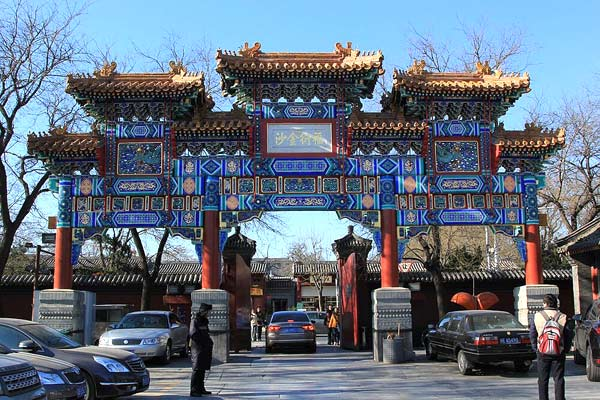
In the heart of Beijing, amidst the urban rhythm and historic hutongs, stands a spiritual and architectural treasure: Yonghegong Lama Temple. Not only is it a serene sanctuary, but it also offers a living narrative of imperial history, Buddhist devotion, and artistic grandeur. Therefore, for travellers seeking cultural depth and peaceful contemplation, this destination is truly unmissable.
Yonghegong’s story is uniquely fascinating. It began in the Kangxi era of the Qing Dynasty as a princely mansion, which was later bestowed upon Emperor Yongzheng before he ascended the throne. Moreover, it was remarkably the birthplace and childhood home of his successor, Emperor Qianlong.
In 1725, it was elevated to an imperial palace, and subsequently, in 1744, under Qianlong’s decree, it was formally converted into a monastery of Tibetan Buddhism of the Gelug (Yellow Hat) school. Consequently, from then on, Yonghegong served not only as a center of Buddhist learning and ritual but also as a symbolic bridge between the imperial court and Tibetan Buddhism, receiving enduring patronage from successive emperors.
Today, as you walk through its halls, you are essentially walking through layers of history: from royal residence to sacred sanctuary.
As a helpful tip for first-time visitors, navigating Beijing can be smooth with a bit of prep. For more essential travel insights, for instance, take a look at our guide: My First Trip to China: 5 Things I Wish I’d Known Earlier.
To ensure a respectful and smooth visit, please note the following:
Stepping out of Yonghegong doesn’t mean the cultural immersion ends. On the contrary, the surrounding Guozijian and Wudaoying hutongs are vibrant, walkable districts brimming with character.
Furthermore, if you enjoy exploring Beijing at a gentle, immersive pace, you might love our walking guide: A Slow Walk in Beijing: From Ancient Bell Towers to Lakeside Art.
Ultimately, Yonghegong Lama Temple is more than a sightseeing stop — it’s a sanctuary where history, faith, and art converge. Whether you come for the breathtaking Maitreya Buddha statue carved from a single sandalwood trunk, the intricate Tibetan thangkas, or simply the palpable sense of peace within its crimson walls, a visit here undeniably offers a profound glimpse into the soul of Beijing.
Plan your visit, tread softly, and let the tranquil chants and fragrance of sandalwood guide you through centuries of stories.
Ready to explore more of Beijing’s hidden gems and cultural treasures with a local perspective?
👉 Join Our Beijing’s Curated Experiences — from intimate hutong experience to immersive foodie tours, let us help you discover the authentic heartbeat of the capital.